Understanding the Role of Drainage Systems in Foundation Health
October 15, 2026
How Drainage Systems Protect Your Foundation From the Ground Up
Foundation King's drainage services in Independence and the broader Kansas City metro exist to solve one specific problem: water that accumulates near your foundation and stays there long enough to do structural damage. Clay-heavy soils across this region absorb rainfall slowly, expand against foundation walls, then shrink as they dry, and that cycle repeated over years is what opens cracks and bows walls inward.
Drainage systems work by routing water away from your foundation before it has a chance to saturate the surrounding soil. When they function correctly, you rarely think about them. When they fail, or were never properly installed to begin with, the consequences show up in your basement walls, your floors, and eventually your foundation's ability to hold the structure above it.
A drainage system, whether it's a
French drain, a catch basin, a properly extended downspout, or an interior drain tile system, interrupts that cycle before it starts. Understanding what each one does and where it fits gives you a clearer picture of what your property actually needs. The sections below cover each component, but this page focuses on the underlying relationship between drainage and foundation health that makes all of it matter.
What Water Near Your Foundation Is Actually Doing
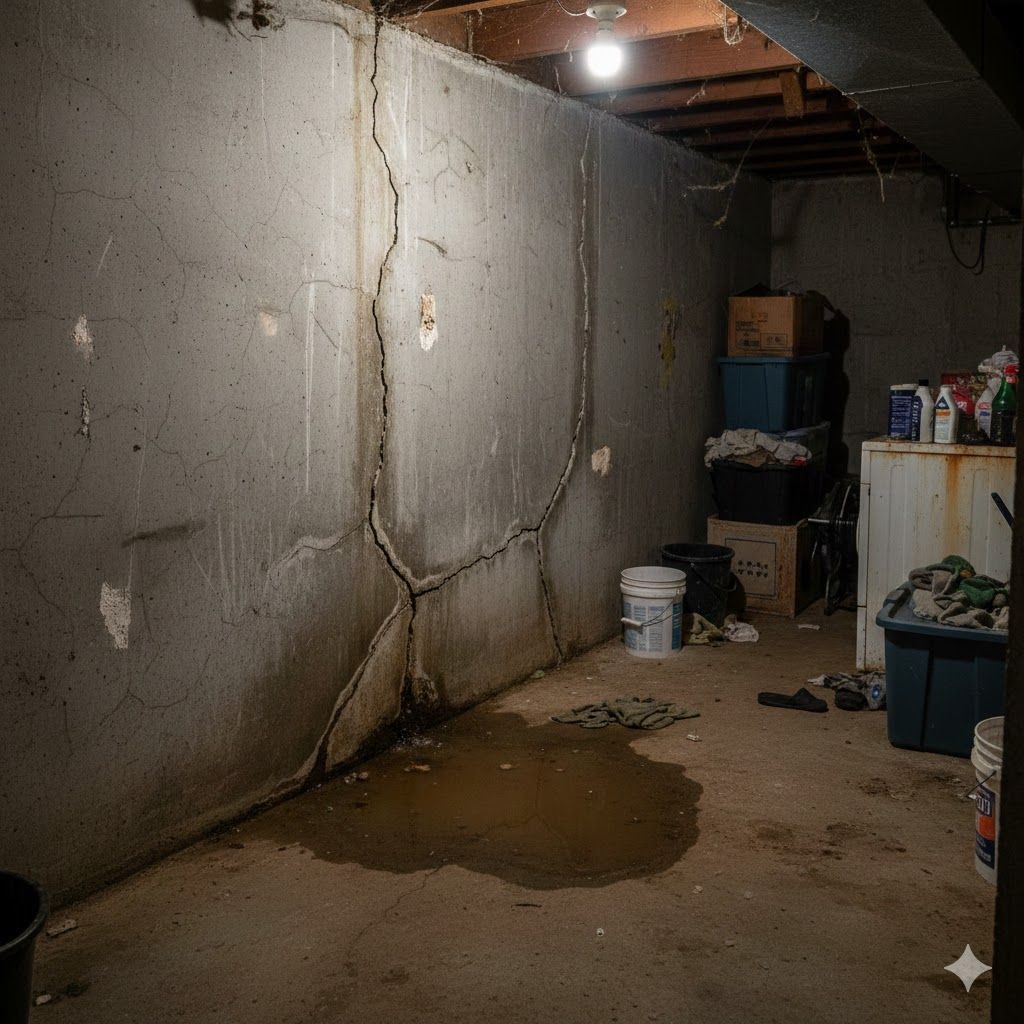
Saturated soil doesn't just sit there. Rainfall that soaks into the clay-heavy ground common across Independence and the Overland Park area causes that soil to expand and push laterally against your foundation walls. This is hydrostatic pressure, and it doesn't behave the way you'd probably expect. The force isn't coming straight down from above; it's pressing sideways from all directions, and foundation walls weren't designed to absorb that load indefinitely.
Clay soil compounds the problem through repetition. It swells when wet, then shrinks and pulls away from the foundation as it dries out. Each wet season followed by a dry stretch puts your walls through another cycle of expansion and contraction, and over years, that movement works cracks open in both poured concrete and block construction.
Pooling within five feet of your foundation perimeter is enough to start that process. You don't need a dramatic flood event. Slow, repeated saturation after ordinary spring rains, the kind the Kansas City metro gets consistently from March through June, does more cumulative structural damage than a single storm because the soil never fully dries out between events. By the time cracks appear on an interior wall, the pressure cycle has usually been running for a while.
The Paths Water Takes Before It Reaches Your Foundation
Surface Runoff and Yard Grade
Repeated saturation narrows things down to two questions: where is the water coming from, and how is it getting there? Foundation King site evaluations consistently turn up three pathways, and each one calls for a different fix.
Negative grade is the most common surface culprit. When the ground slopes toward the house instead of away from it, every rain event sends runoff straight toward the foundation wall, and even a subtle drop of an inch or two over several feet is enough to concentrate water against the footing.
Downspouts That Terminate Too Close
A downspout that discharges within two to three feet of the foundation isn't moving water away from the house; it's delivering roof runoff directly into the soil column next to the footing. On a 2,000-square-foot roof during a moderate storm, that volume adds up fast, and clay-heavy soil like what's common across Independence won't absorb it quickly enough to prevent saturation.
Subsurface Water Movement
The trickiest pathway is the one you can't see. Permeable fill or old excavation backfill, the disturbed soil replaced when the foundation was originally dug, can act as a channel for water moving underground, with the surface looking completely dry the whole time.
Knowing which pathway, or combination of pathways, is active matters before any drainage solution is chosen. Installing a French drain when the real problem is downspout discharge, or regrading when subsurface water is the actual source, wastes time and money without relieving the underlying pressure on your foundation.
Drainage Solutions Foundation King Installs and When Each One Fits
Where the water is coming from shapes which solution actually works. Foundation King installs several distinct drainage systems and waterproofing solutions, and each one fits a specific scenario rather than a general idea of "wet basement."
French Drains
A French drain intercepts subsurface water before it ever reaches the foundation wall. It's the right call when the pressure source is uphill or moving laterally across the lot toward the house. If water is already entering the wall and appearing on your basement floor, a French drain alone won't address what's already inside the wall system.
Interior Drain Tile Systems
Interior drain tile runs along the footing level inside the basement perimeter. Rather than stopping water at the wall, it manages water that has already entered the wall assembly and channels it to a sump pit before it can pool on the floor. This is a common solution in Independence and throughout the Kansas City metro, where clay soil holds moisture against foundation walls long after a storm passes.
Channel and Trench Drains
Hardscaped surfaces like garage aprons, concrete driveways, and patios don't absorb runoff. Water sheets across them and collects wherever grade allows, often against the house. Channel and trench drains give that surface water a direct collection point and route it away from the structure.
Catch Basins and Downspout Extensions
A single downspout can discharge thousands of gallons of roof runoff in one storm, right at the corner of the foundation. Catch basins paired with downspout extensions move that concentrated flow away from the structure entirely. For many homes, this correction delivers the fastest, most cost-effective drainage improvement available.
One honest caveat: a property with both negative grade and active subsurface pressure often needs a combination approach, exterior French drain work plus an interior system, not one or the other. Foundation King evaluates each property individually before recommending a scope of work, because fitting the wrong product to the wrong problem just moves water somewhere else.
To find out which of these fits your property, call us and you'll be scheduled directly with a Foundation King technician who can set up a site evaluation, usually within a few days.
Does a Drainage Problem Always Mean Foundation Damage Has Already Happened?
Not always, and that distinction matters. A surprising number of callers who contact Foundation King after noticing pooling water or damp basement walls find out the foundation itself is still structurally sound. In those cases, fixing the drainage is a preventive investment, and it costs far less than addressing horizontal cracks in block walls or settled footings later.
Drainage and foundation condition aren't independent of each other, though, which is why a Foundation King site visit covers drainage patterns as part of the standard evaluation. A technician checking your foundation isn't just looking at the concrete. Grading, runoff paths, and signs of prolonged soil saturation all factor in.
If drainage failure has already created structural stress, the signs are usually visible:
- Horizontal cracks running across block or poured walls
- Stair-step cracking in mortar joints along a block wall
- Walls that have started to bow inward from lateral soil pressure
These aren't cosmetic issues. They indicate that sustained hydrostatic pressure has begun to move something. Foundation King's team identifies all three patterns and addresses them directly, whether that means
crack repair,
wall straightening, or both alongside a drainage correction.
How Foundation King Evaluates Drainage Before Any Work Begins
Foundation King's technicians walk the full perimeter of your property before recommending anything, checking yard grade, downspout termination points, soil condition along the foundation, and any efflorescence or water staining on basement walls. If you have a sump pump, they check it for proper function and discharge routing, and nothing gets proposed until there's a clear picture of whether the problem is surface water, subsurface movement, or both.
That distinction matters in this region. Independence lots with mature trees often have root-disturbed soil that channels water in unpredictable directions, while newer subdivisions in Overland Park frequently sit on shallow topsoil placed over compacted clay fill, so water hits that clay layer and spreads laterally instead of draining down. The same symptom, water appearing at the base of a basement wall, can have a completely different source depending on which setting you're dealing with.
Homebuyers and realtors navigating an inspection contingency should know that Foundation King's standard inspection fee is $298, credited toward the project cost if repairs move forward. That detail came up directly in calls from buyers and agents trying to understand their exposure before closing.
No drainage correction gets recommended in isolation. The evaluation connects what's happening at the surface to what's happening below it, so the solution addresses the actual cause rather than just what you can see.
Maintaining a Drainage System After Installation
A properly designed drainage system doesn't demand constant attention, but a few annual checks will keep it working the way it was intended.
French drain outlet points are worth inspecting every year, especially in Independence where mature tree canopy makes root intrusion a genuine risk.
Sump pumps connected to interior drain tile systems should be tested before spring, when Missouri and Kansas wet seasons put the most stress on them. Catch basin grates collect leaf debris through fall, and clearing them before the first freeze prevents ice from blocking flow during the freeze-thaw cycles that are routine in the Kansas City metro.
None of these take more than an hour. A visual walk-around each season catches small problems before they turn into a drainage failure that puts pressure back on the foundation you just had repaired.
Get Drainage Help Today
Schedule a site evaluation or give us a call. The $298 inspection fee is credited back if you move forward with repairs, and it's the clearest way to find out whether your drainage situation is a preventive fix or something that's already affecting your foundation.
FOLLOW US
#showusyourcracks